
However, notable absentees from the expo will be Honda, Toyota, Ford, BMW, Audi, Lexus, Volvo and Jaguar Land Rover along with two-wheeler majors Hero MotoCorp, Bajaj Auto and TVS Motor Co.

November IIP data show a fall of over 20%, led by automobiles, gems & jewellery and home appliances; turnaround seen as unlikely.
The company, which sells every second car in the domestic market, said it expected production and sales to grow between 4 per cent and 8 per cent for the financial year started in April.

The price differential has been upwards of 20%.

Tata Motors aims to address 95% of passenger vehicle market by 2020

Big brands like Hyundai, Mahindra and Mahindra (M&M), Toyota and Renault have lost share.
The first half of 2019-20 will be under pressure, since prices are expected to go up by Rs 7,000-8,000 at a time when sentiment is poor.

Declining motorcycle sales remained a cause of worry.

The overall volume at India's top four M&HCV makers - Tata Motors, Ashok Leyland, Volvo Eicher, and Mahindra & Mahindra - fell 59.5 per cent to 31,067 units during the month.

Vehicle sales across categories registered an increase of 5.03 per cent to 16,03,292 units from 15,26,514 units in November 2013.

Increased truck sales, new models push Leyland's share to 34%, from 30.2% in the same quarter a year before.

At present, there are many vehicles that weigh close to the proposed increased weight of 600 kg.

What explains India's love affair with SUVs? They are not exactly "value for money" -- the watchword for brands across segments -- nor always practical. Is it for the badge value? Or the butch imagery associated with SUVs? Maybe both, says Alokananda Chakraborty.
In a rare face off, captains of the auto industry have hit out at the government for not walking the talk. At an industry event in the capital on Wednesday, R C Bhargava, chairman of India's largest carmaker Maruti Suzuki, and Venu Srinivasan, chairman of TVS Motor, questioned the government's intent to support the auto sector. Revenue secretary Tarun Bajaj sat in the audience listening, before his turn came to counter them.
India, is home to 15% of all traffic fatalities.

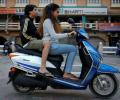
Two-wheeler prices are likely to rise by 10-25 per cent on account of higher premiums on insurance and commodity prices, mandatory safety regulations and BS-VI emissions that kick in from April 1, 2020.

Mahindra is desperate for a best-seller in the compact SUV space, on which it missed the bus
.jpg)
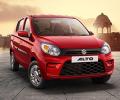
Country's largest car-maker Maruti Suzuki India continues its dominance on the Indian roads, with its four models, led by entry-level small car Alto.

The passenger car segment, in comparison, remained sluggish and grew a modest 1.9 per cent to 162,566 units in April
Customers have started to factor in the narrowing gap between petrol and diesel and the premium that needs to be paid for a diesel vehicle.
Component makers don't see any recovery yet, but manufacturers believe the end of poor sales is nearing its end.

The government plans to take India into the top 50 ranks in ease of doing business in the next two years with efforts such as shifting all applications for industrial licenses online.
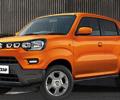
The growth in the PV segment was primarily led by car market leader, Maruti Suzuki India, which saw its dispatches to dealers grow 4.4 per cent YoY to 144,277 units after 10 months of drop. It was driven by new launches, such as the S-Presso, a mini sport UV.

Increasing the duties on auto parts and putting an additional cess on petrol and diesel could drive up costs of vehicles, specially where volumes are low and localisation is not viable.

The company had identified some emission-related issue with Tavera and some quality issue with Sail.

These risks would be significantly reduced if the cars had to comply with the UN test regulation for frontal and side impact.

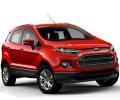
The increase in PV sales in September was driven by festive season purchases, with SUV models like Maruti Suzuki's Brezza, Hyundai Creta, Mahindra Scorpio, Ford Ecosport and Honda W-RV witnessing good traction
One litre of petrol now costs Rs 64.76 while the diesel price is Rs 54.70 a litre in Delhi

As many as 25-30 new products, upgrades and variants will be launched by the Mumbai-based company in the second half of the financial year, even as hope of a demand turnaround remains distant.
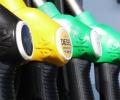
From April 2020, manufacturers will have to hike prices of diesel cars sharply to accommodate the costs incurred in the transition to BS VI emission norms, and widening the gap between a diesel and petrol car.
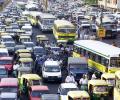
'Petrol cars, which constitute the majority, do not contribute to the 2.5 PM emissions as petrol used in the country is of higher quality.'

With multiple options in the compact sport utility vehicle (SUV) and compact sedan space, the mid-size sedan seems to be losing its charm among customers.
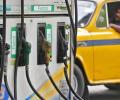
What's driving consumers to petrol cars? Ajay Modi finds out.

Passenger vehicle wholesales in India increased by 17 per cent in the second quarter of the current fiscal year as buying sentiment improved and companies stocked up to cater to enhanced demand in the festive season, auto industry body SIAM said on Friday. According to the latest data by the Society of Indian Automobile Manufacturers (SIAM), passenger vehicles sales in the July-September quarter increased to 726,232 units from 620,620 units in the same period last year. Similarly, two-wheeler sales during the September quarter this fiscal rose marginally to 46,90,565 units as compared with 46,82,571 units in the same period last fiscal. However, commercial vehicles sales saw a dip of 20.13 per cent at 133,524 units in the quarter under review as compared with 167,173 units in July-September 2019.

Apart from a pavilion of vintage cars, there will be a Bollywood corner

Bankers say loan demand was more muted this festival season than last year.

Tata now occupies the fourth slot with the incremental volumes from the Tiago
This is the seventh straight month of growth

The change in stance follows a strong opposition by automakers of the proposed government plan to ban two-wheelers (below 150cc) and three-wheelers by 2023 and 2025, respectively

Mercedes Benz, BMW and Audi have sharply increased their sourcing from India.
 © 2026 Rediff.com - Advertise with us - Disclaimer - Privacy Policy - Sitemap - Feedback - About us - Terms of use - Grievances